

InfuseOS vs Manus : Everything You Need to Know Before Choosing
InfuseOS vs Manus: compare pricing, memory, and integrations to choose the right AI platform for workflows, team productivity, and autonomy.


Choosing between InfuseOS and Manus is not just a feature comparison. It is a decision about how you want AI to support work, connect with business systems, and scale across teams.
At a glance, both platforms aim to reduce manual effort and help users move faster. But the real difference often shows up in three areas that matter most to buyers: pricing, memory and context, and tool integrations. Those factors shape long term value far more than a polished demo or a short trial.
Why This Comparison Matters
Many companies are no longer looking for another chatbot. They want an AI business assistant that can support daily execution, fit into existing processes, and create measurable efficiency gains.
That is where the comparison becomes more practical. If your team is evaluating modern productivity tools or broader workflow software, the best choice depends on how each product handles cost, contextual intelligence, and operational connectivity.
What is InfuseOS?
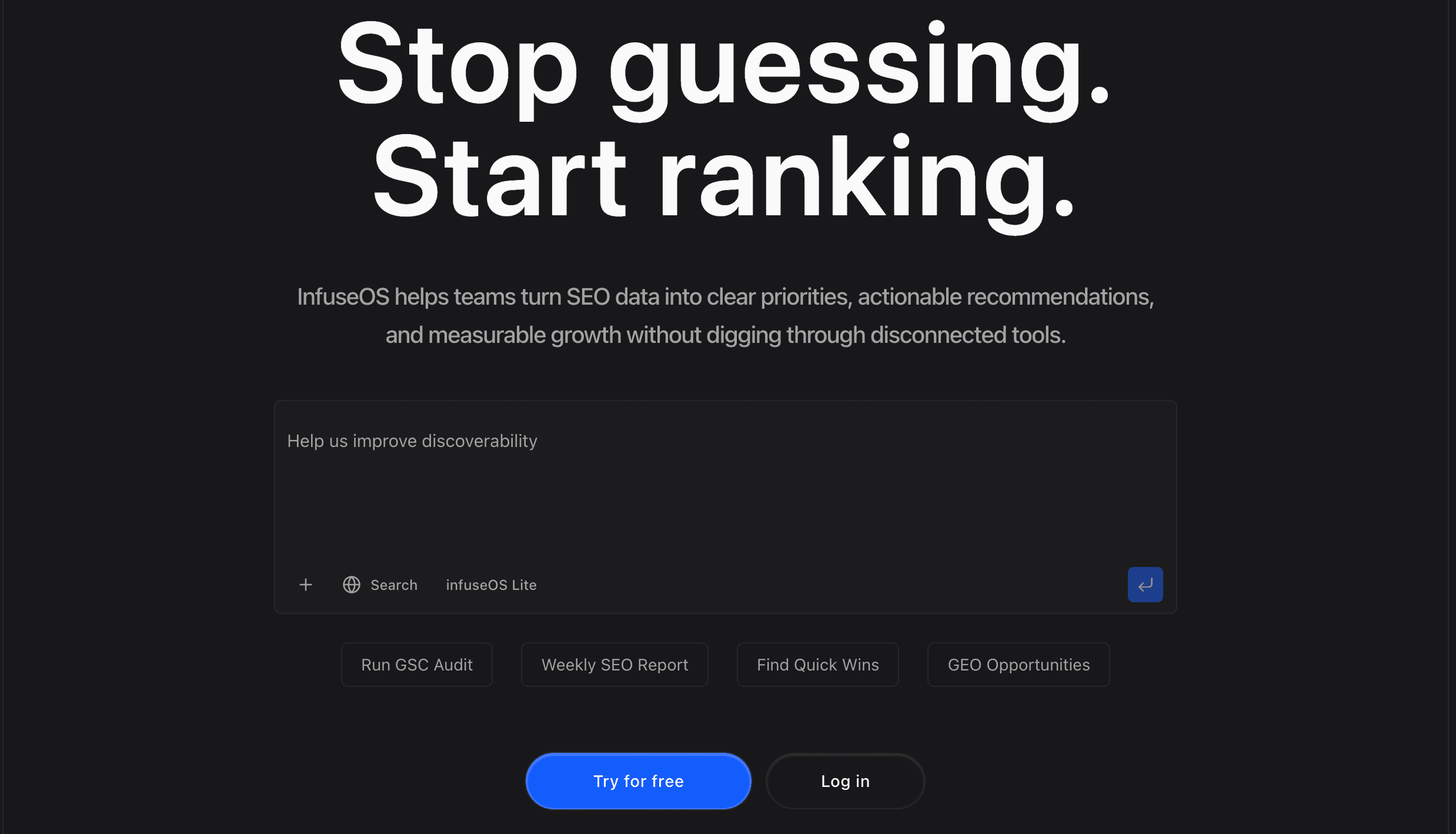
InfuseOS can be understood as a system designed to help people and teams use AI in a structured, repeatable way. The focus is not only on answering prompts, but also on supporting workflows, connecting tools, and helping work move from request to execution.
For organizations, that matters because AI becomes more useful when it fits into the way teams already operate. Instead of acting like a standalone assistant, it starts to function as part of the company’s working environment.
What is Manus?
Manus is often positioned more as an autonomous AI agent that can take on tasks with a higher degree of independence. The appeal is straightforward: users can assign a goal, let the system reason through steps, and receive an outcome with less hands-on management.
That model can be compelling for research, one off projects, and multi step task execution. But for many businesses, the question is whether that autonomy translates well into ongoing operational work.
Pricing: What Buyers Should Really Compare
Pricing is usually the first item decision makers examine, but it should not be treated as a simple monthly fee comparison. The real issue is how each platform creates value over time.
InfuseOS pricing considerations
For a platform like InfuseOS, pricing should be evaluated through an operational lens. Ask questions such as:
- Does the pricing support team use, not just individual use?
- Are workflow capabilities included, or locked behind higher tiers?
- Can the platform replace several disconnected productivity tools?
- Does the cost make sense for repeated business use cases?
If InfuseOS is positioned as workflow software, then its value increases when teams use it consistently for structured tasks. In that scenario, buyers may justify spend based on saved time, reduced coordination overhead, and better process consistency.
Manus pricing considerations
For Manus, pricing may feel easier to justify when the product is used for high leverage tasks that benefit from autonomy. That could include deep research, content preparation, synthesis, planning, or execution across multiple steps.
The key question is different here. Instead of asking whether it supports repeatable workflows, buyers should ask whether the product saves enough effort on complex tasks to offset its cost.
The main pricing difference
To put it simply, the pricing comparison often comes down to repeatability versus task intensity.
- If you want value from recurring team activity, InfuseOS may be easier to evaluate.
- If you want value from autonomous task completion, Manus may look stronger in certain scenarios.
- If your company wants AI embedded into routine work, pricing should be tied to adoption across functions.
- If your company wants AI for selective high impact use cases, pricing may be tied to output quality and speed.
That is why the cheapest option is not always the best one. The better choice is the platform whose pricing model matches the way your business actually works.
Memory and context: Where Usefulness Becomes Durable
Memory and context often determine whether an AI product becomes truly useful after the first few interactions. A system that remembers preferences, understands prior work, and applies organizational knowledge can deliver better results with less repetition.
This is especially important for teams. A strong AI business assistant should not start from zero every time.
How to evaluate InfuseOS on memory and context
InfuseOS is likely to be more compelling if your team values persistent context across tasks, people, and business functions. In practical terms, that could mean:
- remembering user preferences
- retaining workspace level knowledge
- using prior instructions to improve future outputs
- grounding responses in team specific information
For organizations, this matters because context creates consistency. It reduces the need to restate company details, process rules, preferred formats, or recurring goals.
In a business setting, that kind of memory can make AI feel less like a tool and more like infrastructure.
How to evaluate Manus on memory and context
With Manus, the evaluation may focus more on how well the agent holds context within a task or a chain of tasks. That can be powerful for execution oriented work, especially when the system needs to reason through multiple steps.
Still, buyers should look closely at the depth of long term memory. Important questions include:
- Does it remember user preferences between sessions?
- Can it store business knowledge in a reliable way?
- Is context personal, shared, or task based?
- How much manual setup is required to maintain continuity?
The main memory difference
The main difference is that InfuseOS may be better suited for organizational context, while Manus may be stronger in task context.
That distinction matters. One helps teams create continuity over time. The other helps an agent stay effective while completing a specific assignment.
If your goal is durable knowledge inside a company, memory needs to work across people and workflows. If your goal is autonomous execution, memory needs to support reasoning and task completion without losing direction.
Tool integrations: Where AI Becomes Operational
Integrations are often treated as a technical detail, but they are one of the clearest indicators of real business value. An AI system becomes far more useful when it can access the applications where work already happens.
That includes email, documents, calendars, messaging platforms, CRMs, knowledge bases, and internal systems.
Why integrations matter in practice
Without integrations, an AI tool may generate ideas but fail to move work forward. With integrations, it can act inside the environment your team uses every day.
For buyers evaluating workflow software, this is critical. A platform that connects well can help teams turn prompts into outcomes.
How InfuseOS may stand out
InfuseOS is likely to be more attractive if your organization wants AI embedded into a business stack. That means the platform should support connections that allow users to:
- retrieve information from work apps
- trigger actions across systems
- support recurring processes
- reduce switching between tools
- connect AI to operational workflows
In that model, integrations are not just add ons. They are the mechanism that turns AI into something useful for departments like operations, sales, support, or internal enablement.
How Manus may stand out
Manus may be more appealing when integrations are used to help an agent complete broad, multi step assignments. The emphasis may be less on orchestration across business systems and more on enabling the agent to gather inputs, act on instructions, and return finished work.
That can be valuable, especially for users who want fast outcomes without designing a detailed process.
The main integrations difference
Here is a closer look at the distinction:
- InfuseOS may fit better when integrations support structured business execution.
- Manus may fit better when integrations support autonomous task completion.
- InfuseOS may be stronger for team operations.
- Manus may be stronger for delegated projects.
The best option depends on whether your company wants AI to operate like a connected system or like an independent operator.
Which platform is right for you?
Choosing the right approach depends on your goals.
Choose InfuseOS if you want:
- AI that fits into repeatable business processes
- stronger alignment with team workflows
- contextual continuity across users and tasks
- connected systems that support daily operations
- a platform that behaves more like enterprise ready workflow software
Choose Manus if you want:
- an agent that can handle broad assignments with more autonomy
- support for one off, multi step execution
- a tool that can reduce hands on effort for complex tasks
- AI that acts more like an independent operator than a structured workspace layer
Final takeaway
InfuseOS and Manus may appear similar at first, but they solve different problems once you look at pricing, context handling, and integrations.
If your priority is embedding AI into the way teams work, InfuseOS may be the stronger choice. If your priority is delegating complex tasks to an autonomous system, Manus may be the better fit.
In other words, this is not just a comparison between two AI products. It is a choice between two different models of value. One emphasizes connected execution inside the business. The other emphasizes independent task completion.
For buyers exploring modern productivity tools, that distinction is what makes the decision clearer.