InfuseOS vs n8n: Which Is Better for SEO Automation?
Compare InfuseOS vs n8n for SEO automation and see which platform is better for AI-driven workflows, team coordination, and technical control.


Both InfuseOS and n8n can automate SEO work, but they solve different problems. One is built to help teams deploy AI-driven workflows with more operational context. The other is a flexible automation builder that gives technical users broad control. The best choice depends on how your team wants to scale SEO.
Why this comparison matters for modern SEO teams
SEO is no longer limited to keyword research and page updates. Today, teams need to monitor rankings, identify content gaps, enrich briefs, analyze competitors, refresh aging pages, route approvals, and turn insights into repeatable execution. That is why automation has become a priority.
The challenge is that not all automation platforms are designed for the same kind of work. Some are best for connecting apps and moving data from one place to another. Others are better suited for orchestrating context-aware workflows that support decision-making across content, operations, and growth.
That distinction matters when comparing InfuseOS and n8n.
InfuseOS an AI-first approach to SEO automation
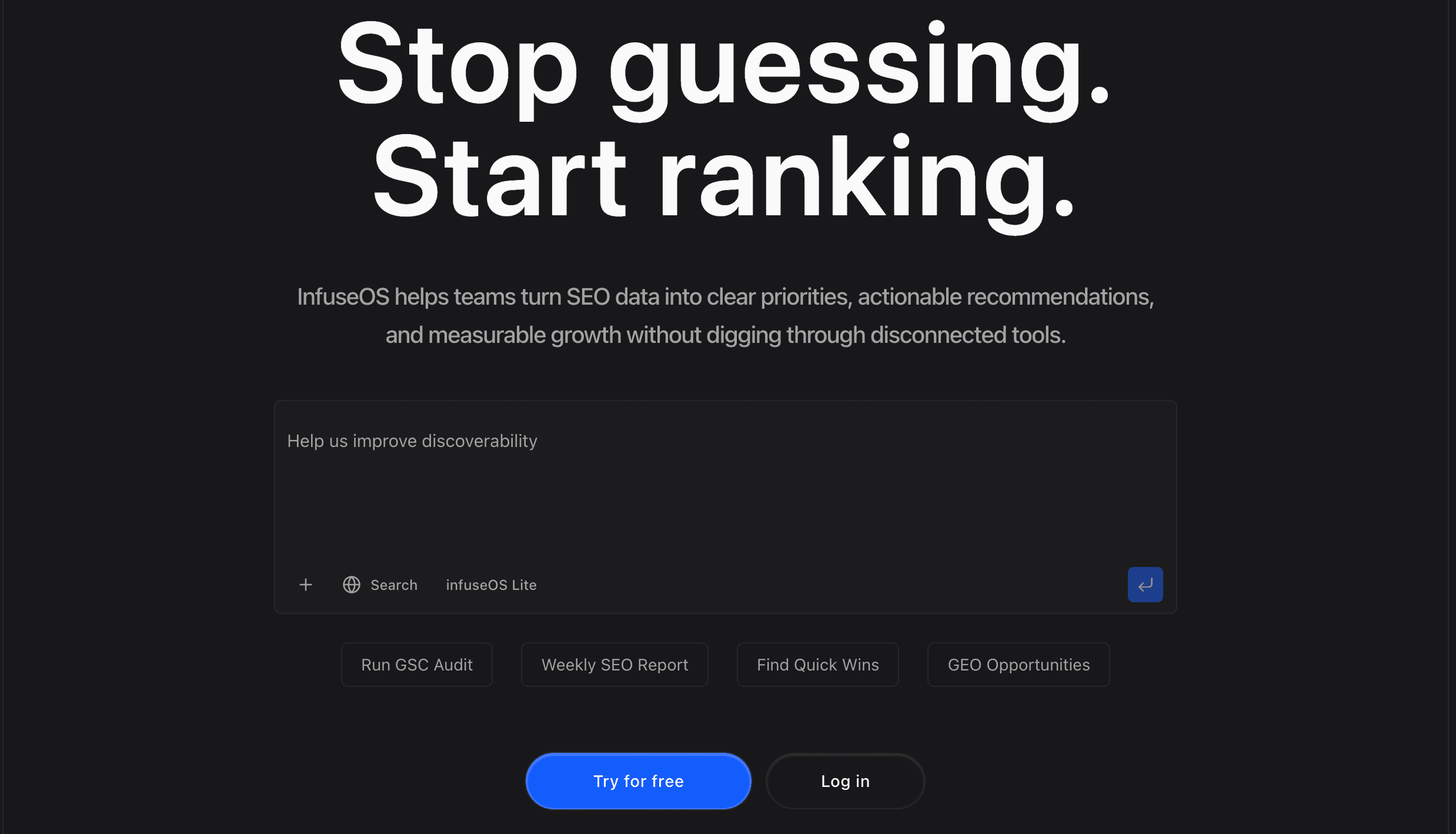
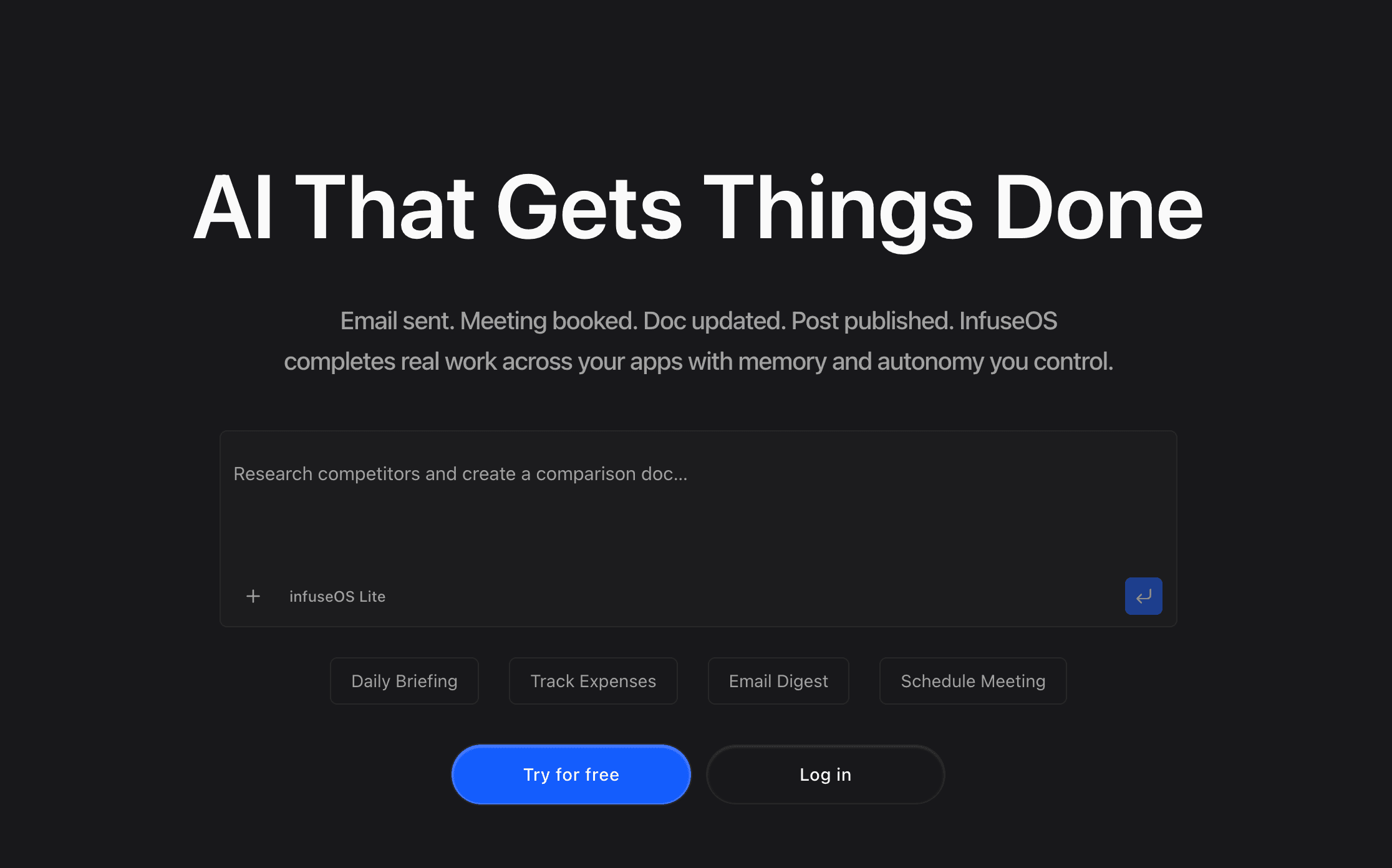
InfuseOS is an AI agent platform designed to help teams build and run workflows that do more than trigger actions. Instead of only connecting tools, it can support processes that require reasoning, coordination, and structured execution across a business workflow.
In SEO, that matters because many high-value tasks are not purely mechanical. They often involve judgment, prioritization, and collaboration between marketers, content teams, and operators.
A team might use InfuseOS to:
- identify pages losing visibility
- analyze likely causes behind traffic decline
- draft optimization recommendations
- route findings to the right stakeholders
- trigger follow-up tasks across content and operations
- keep a record of what changed and why
This makes InfuseOS relevant for organizations that want automation to function less like a script and more like an operational layer for marketing execution.
n8n flexible workflow automation for technical builders
n8n is a workflow automation platform known for its flexibility. It lets users connect apps, define logic, handle data transformations, and create custom automations across a wide range of systems.
For SEO teams, n8n can be useful when the goal is to automate structured, rules-based tasks such as:
- pulling search data from APIs
- moving keyword data into spreadsheets or databases
- sending alerts when rankings change
- syncing tasks between project tools
- triggering reports on a schedule
Its appeal is clear. If your team is comfortable designing workflows node by node, n8n offers a high degree of control. It can act as the backbone for custom automations, especially when engineering or operations support is available.
The biggest differences that shape SEO outcomes
The main difference is that InfuseOS is better suited for AI-led, multi-step SEO operations, while n8n is better suited for workflow wiring and system integration.
Here is a closer look at where that difference shows up.
1. Workflow intelligence
InfuseOS is designed for workflows that require interpretation and next-step logic. That makes it useful for SEO tasks where the system must evaluate signals and decide what should happen next.
n8n is strong at deterministic automation. If this happens, do that. That model works well for data routing and triggers, but it usually requires more custom design when workflows involve judgment-heavy tasks.
2. Ease of scaling across teams
InfuseOS is better aligned with cross-functional execution. SEO rarely lives in isolation. Writers, editors, developers, analysts, and marketing leads often need to participate in the same process.
Because of that, teams often need more than automation. They need visibility, handoffs, and operational consistency. That is where InfuseOS can be a stronger fit, especially for companies evaluating team collaboration tools alongside automation.
n8n can absolutely support team workflows, but it often depends on how well the flows were designed and documented. In many organizations, that can make the automation harder to scale beyond its original builder.
3. Technical overhead
n8n generally rewards technical users. Its flexibility is a strength, but it can also create complexity. Teams may need to manage logic branches, custom integrations, data formatting, retries, and maintenance over time.
InfuseOS is the better choice when the priority is operational usability rather than low-level workflow engineering. That can reduce friction for marketing teams that want automation without turning every SEO process into a technical project.
4. SEO use case depth
n8n performs well when the job is to connect sources and move information. For example:
- export keyword rankings every morning
- send Slack alerts for site errors
- populate a dashboard from multiple tools
InfuseOS becomes more valuable when the use case is broader, such as:
- detect underperforming content
- diagnose performance shifts
- generate an action plan
- assign next steps to the right owners
- track whether recommendations were implemented
In other words, n8n helps automate tasks. InfuseOS helps automate outcomes.
Where InfuseOS stands out
InfuseOS is better suited for SEO workflows that require coordination, prioritization, and multi-step decision-making. It can be a strong fit when automation needs to support broader operational processes rather than just move data between tools.
It may be especially useful for teams that want to:
- connect SEO insights to downstream execution
- manage workflows involving multiple stakeholders
- standardize recurring optimization processes
- use an AI agent platform to support more context-aware automation
This can make InfuseOS relevant for organizations treating SEO as part of a larger operational system, not just a reporting function.
Where n8n stands out
n8n is stronger when teams need flexible, technical automation across apps, databases, and APIs. It is well suited for structured workflows where the logic is clear and the goal is to automate repeatable tasks efficiently.
It may be a better fit for teams that want to:
- build custom workflows across a wide range of tools
- automate data movement and reporting pipelines
- create trigger-based SEO processes with detailed control
- support technical marketing operations with adaptable workflow logic
This makes n8n appealing for teams that prioritize flexibility and hands-on customization.
Which platform is better for different SEO scenarios?
The answer depends on what you mean by SEO automation.
If your goal is to automate repetitive actions between tools, n8n may be enough.
If your goal is to automate how SEO work is analyzed, prioritized, assigned, and executed across a team, InfuseOS is the better fit.
A simple way to think about it is this:
- Choose n8n for workflow building and app-level automation.
- Choose InfuseOS for AI-driven SEO operations that require context, coordination, and follow-through.
Final takeaway
If your team wants flexible automation pipes, n8n is a capable choice.
If your team wants a platform that can help manage SEO workflows with more intelligence, structure, and business context, InfuseOS is the better option.
The right decision comes down to this question: Are you automating steps, or are you automating the work itself?